

Every hunter has the same problem: the answer exists somewhere across five different tools, and finding it costs more time than acting on it.
Threat Analyzer isn't a new product bolted onto RogueTrace for the sake of a press release. It's the question-answering layer we built so a hunter can ask something in plain language, such as which APT groups have been targeting AI research labs lately, and get a cited answer back, instead of hand-building that answer across four separate lookups.
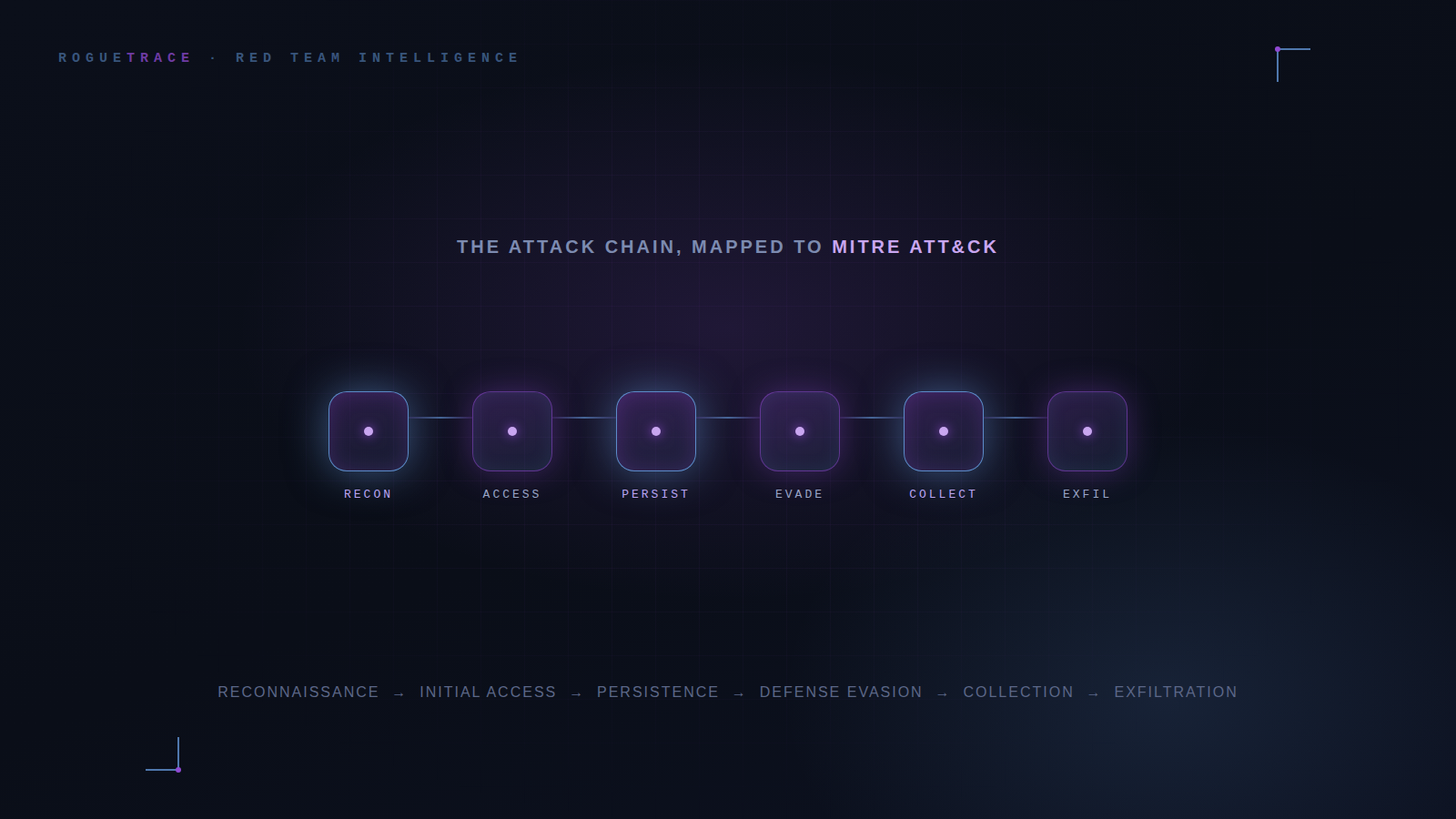
Ask it about a threat actor and it pulls from live dark web feeds, APT threat-actor profiles, and researcher-submitted findings on injection techniques and jailbreak vectors, then grounds the answer in MITRE ATT&CK and Sigma context, so the tactics and techniques it names map to a taxonomy you already use. Ask it about a wallet address and it traces linked threat actors, behavioral patterns, and sanctions exposure the same way.
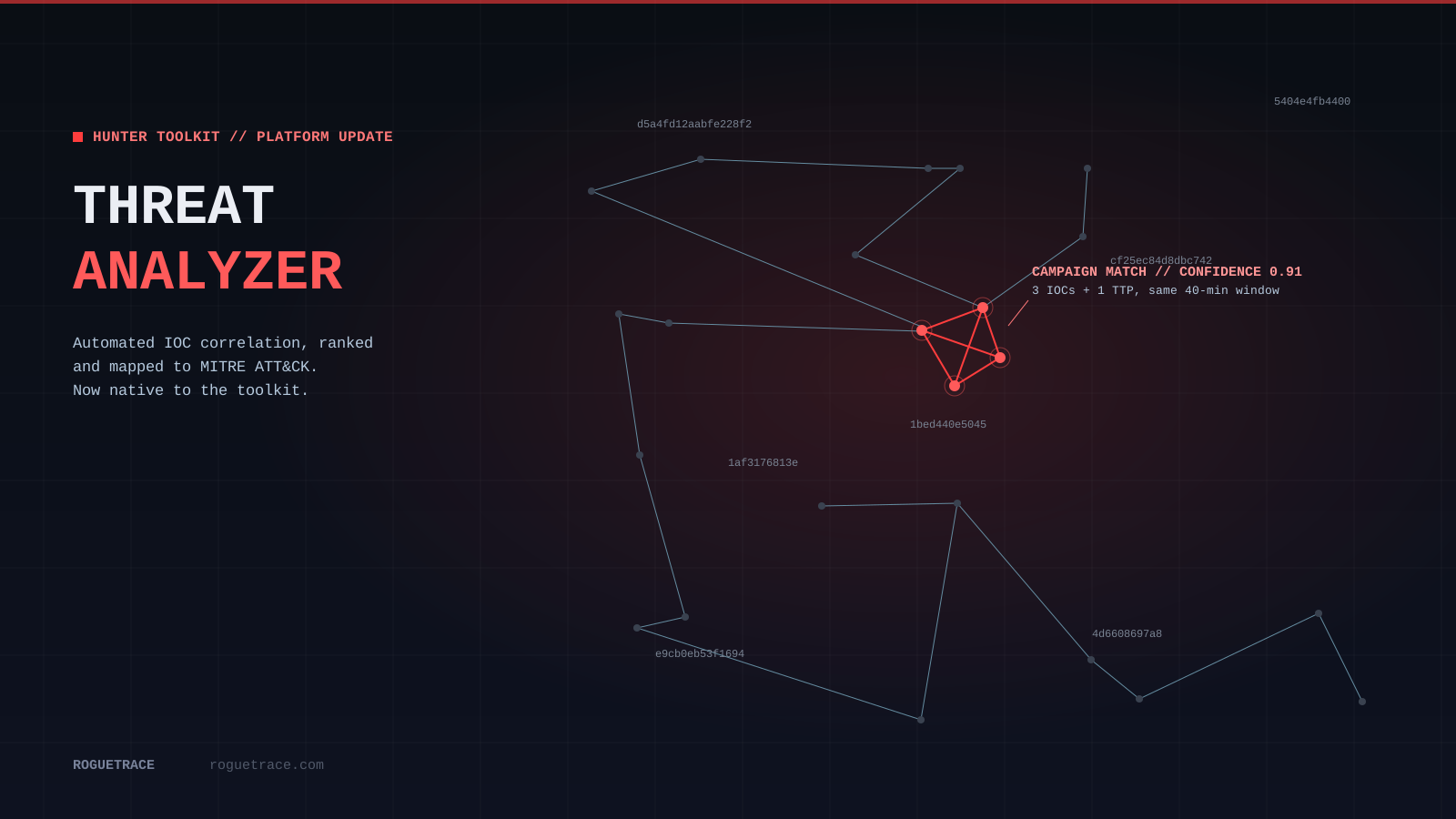
That's the difference between a search bar and an analyst. VirusTotal tells you a file is dirty. Threat Analyzer tells you who's likely behind it, what they've done before, and where else that pattern has shown up.
Ask "who's behind this domain" in plain English and get an answer grounded in MITRE ATT&CK, not five tabs and a guess.
Here's why it lives inside the Hunter Toolkit instead of off in its own corner of the platform: it was never meant to replace Shodan, Censys, Maltego, or VirusTotal. It was built to sit on top of them and answer the question those tools can't ask back.
A typical workflow now looks like this: recon and exposure data comes in from Shodan or Censys, reputation checks run through VirusTotal, on-chain exposure gets flagged by tracing a wallet address, and instead of manually stitching four separate lookups into one narrative, Threat Analyzer answers the actual question, such as whether this is the same actor seen last month, grounded in MITRE ATT&CK and Sigma context, with citations back to where each claim came from.
It's also the fastest way into the researcher-submitted side of RogueTrace: injection techniques, jailbreak vectors, and token-smuggling patterns hunters have already found and written up, searchable in plain language instead of buried in a forum thread.
None of this matters if it just makes search feel modern. The actual point is time. Every minute spent manually stitching together a wallet trace, a threat-actor profile, and a technique write-up is a minute not spent on the part of the job that needs a human: deciding what the answer means for your case.
This is also where it earns its place next to the insider-threat and hacktivist case work we publish: the same plain-language search that surfaces an APT group's known TTPs will just as easily surface a researcher's write-up on a model-poisoning technique, or a wallet trace tied to a sanctioned entity. One interface, whatever kind of threat you're chasing.
If you're already inside RogueTrace, Threat Analyzer is already there: no setup, no new account, no extra key to manage. Open the Hunter Toolkit and ask it something.
One question, one cited answer, grounded in the taxonomy you already use: that's the whole pitch.